

January in the Garden: A Time for Rest and Renewal
The thermometer hit 72 degrees last week here in Raleigh, and I could feel it—that familiar gardener's itch. The urge to dig, to plant, to do something in the garden. But January asks something different of us: patience.
Even when our North Carolina weather plays tricks on us with its unseasonal warmth, January remains a month of rest. Not just for us, but for the entire ecosystem we've been nurturing all year long.
Why Winter Rest Matters
Just as we humans need January to reset after the holiday rush, our gardens need this dormant period to regenerate. Since the winter solstice on December 21, the days have been slowly lengthening, but we're still in that quiet window where nature pulls inward, gathers strength, and prepares for the explosion of growth to come.
This is true even when my nigella, bachelor's buttons, and larkspur—those enthusiastic volunteers—start popping up, confused by a warm spell. I let them be. They know what they're doing, and my job is to trust the process.
The Hidden Life in Winter's "Mess"
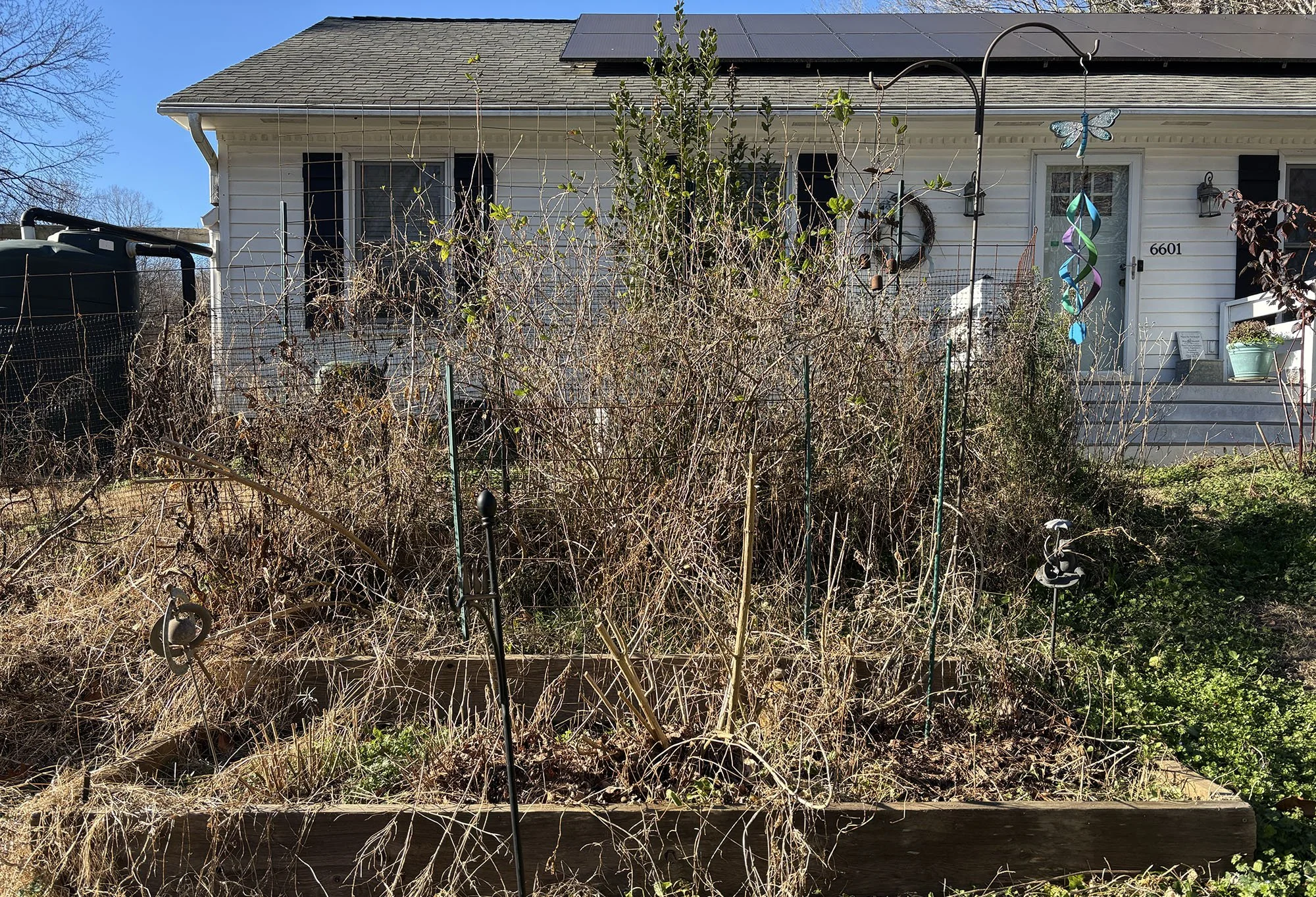
There's a reason I don't deadhead my perennials in fall, and it's buzzing beneath the surface (or will be, come spring). Those spent stalks and seed heads aren't garden debris—they're winter hotels and food. Native bees, beneficial insects, and countless other pollinators are tucked inside hollow stems, waiting out the cold. Birds are still grabbing at the seed heads.
Beneath the leaves I've left scattered across my beds, an entire world hibernates. Toads burrow into the soil. Anoles shelter under bark and leaf litter. The firefly larvae that will light up our summer evenings are down there in the damp earth. Ground bees, moths, and countless other beneficial insects rest just beneath the surface, insulated by that natural mulch we might be tempted to rake away.
Life is happening. It just looks quiet.
The Work That January Does Allow
This doesn't mean the garden is completely off-limits. January is prime time for pruning dormant trees and shrubs—my peach, Beautyberry, fig, and elderberry all get their annual haircuts now, while they're sleeping and won't feel the shock.
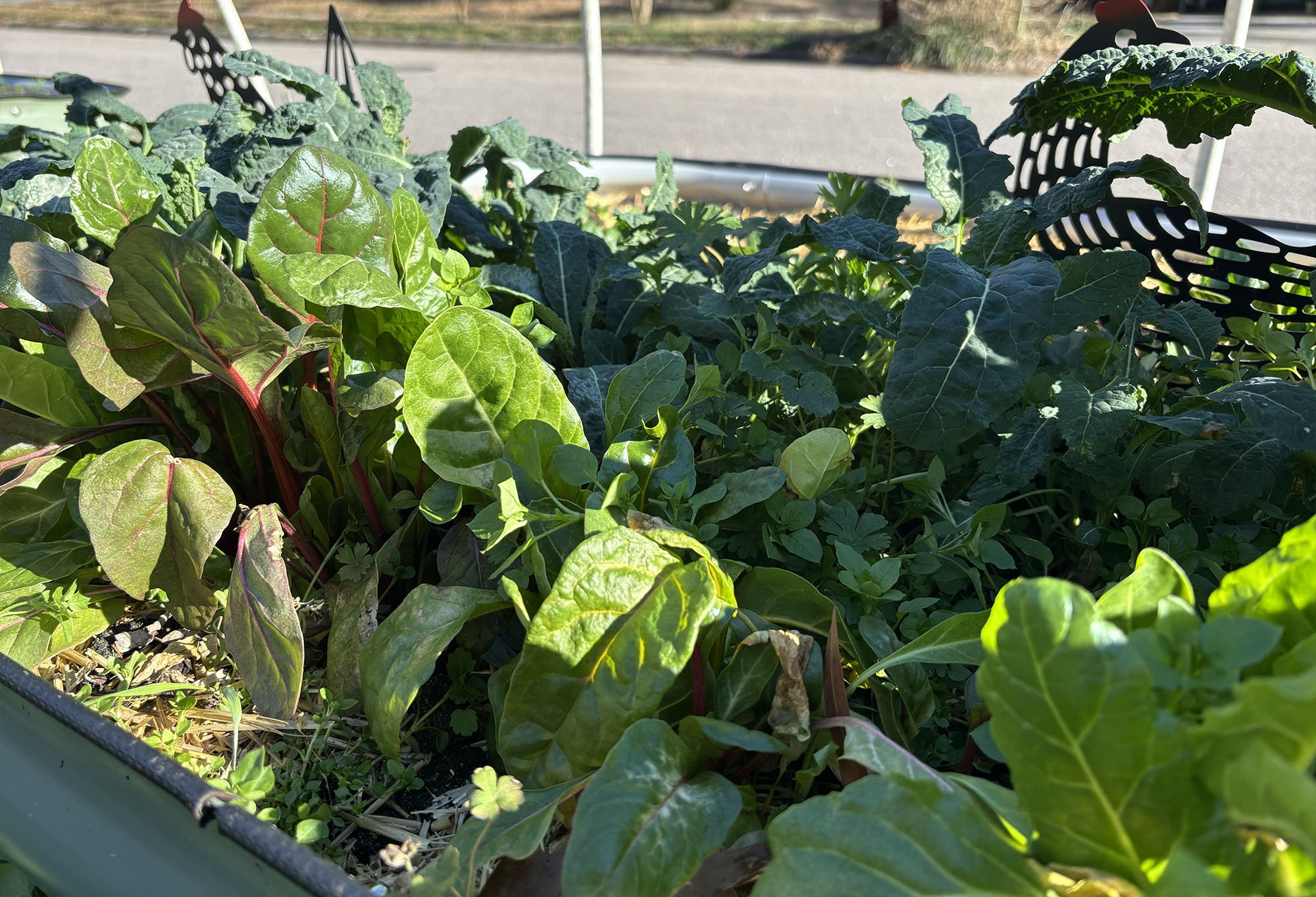
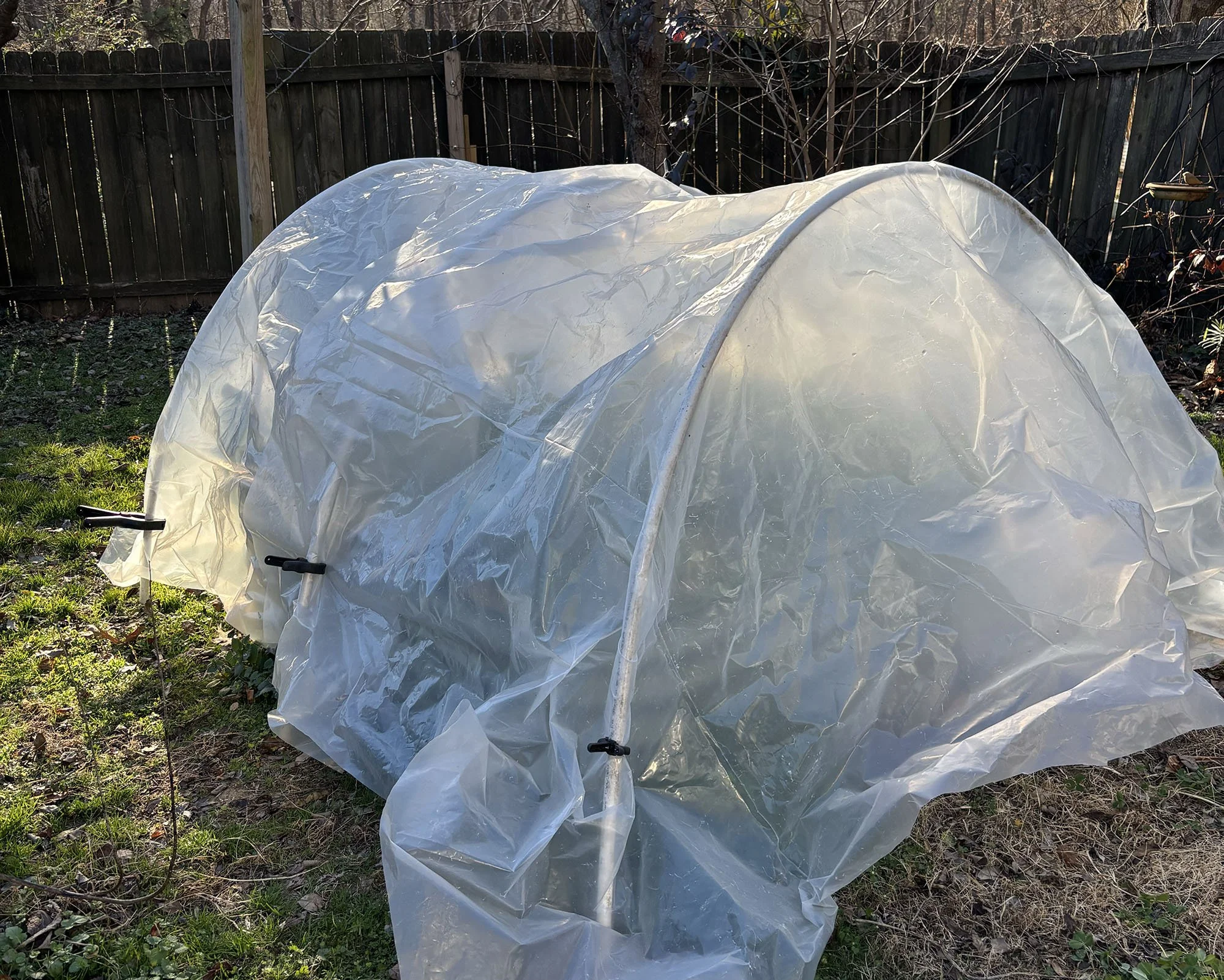
My raised beds aren't resting, exactly. They are working overtime with cold-weather crops: kale and broccoli that get sweeter after a frost, spinach and garlic starting its long journey to spring harvest, and chard that shrugs off temperatures that would devastate tomatoes. When a hard freeze threatens, I loop PVC pipes over the beds and drape them with plastic sheeting—just enough protection to minimize frost damage without coddling them.
Indoors, I've already started lettuce and arugula, eager to get those into beds soon. And I'm doing that most dangerous of January activities: browsing seed catalogs. Every year, I convince myself I have room for more varieties than my garden could possibly accommodate. Every year, I'm wrong. Every year, I order them anyway.
Soon, but not yet, I'll start tomatoes, peppers, and perennials under lights. In a few weeks, I'll plant snap peas outside, those cold-hardy pioneers that don't mind chilly soil.
Rest, Plan, Reset
But mostly? I rest. I plan. I sketch garden layouts and dream about color combinations. I reset my own energy while the garden resets its biological clocks.
Because spring isn't just coming; it's building itself right now, underground and in the stillness. And when it arrives in its full, glorious emergence, both the garden and I will be ready.
For now, we rest together.