
From Red Clay to Raised Beds: Real Gardening Challenges and How We Solved Them
Gardening Challenges Are Inevitable. Here's How to Keep Growing Anyway
Gardening isn’t for the faint of heart. You need resilience, just like the plants in your yard. Each year, each season, and each plant brings its own challenges. But if there’s one thing I have learned from decades of gardening, it's that you keep going—trying, experimenting, improving—and your garden keeps evolving. And that is a good thing.
Change the Soil and Change Your Garden
When we bought our property, it was trees, grass, and some sad bushes. In other words, it was a typical suburban yard. The front yard received the most sunlight, so we knew we would do most of our gardening and food growing there. We set about removing trees (we planted more trees than we removed) and pulling up grass where we laid down raised beds. We also added yards of wood chips from tree companies to build up the soil over the red clay. Don’t get me wrong, you can grow food and other plants in red clay, but for us, we wanted to change the soil.
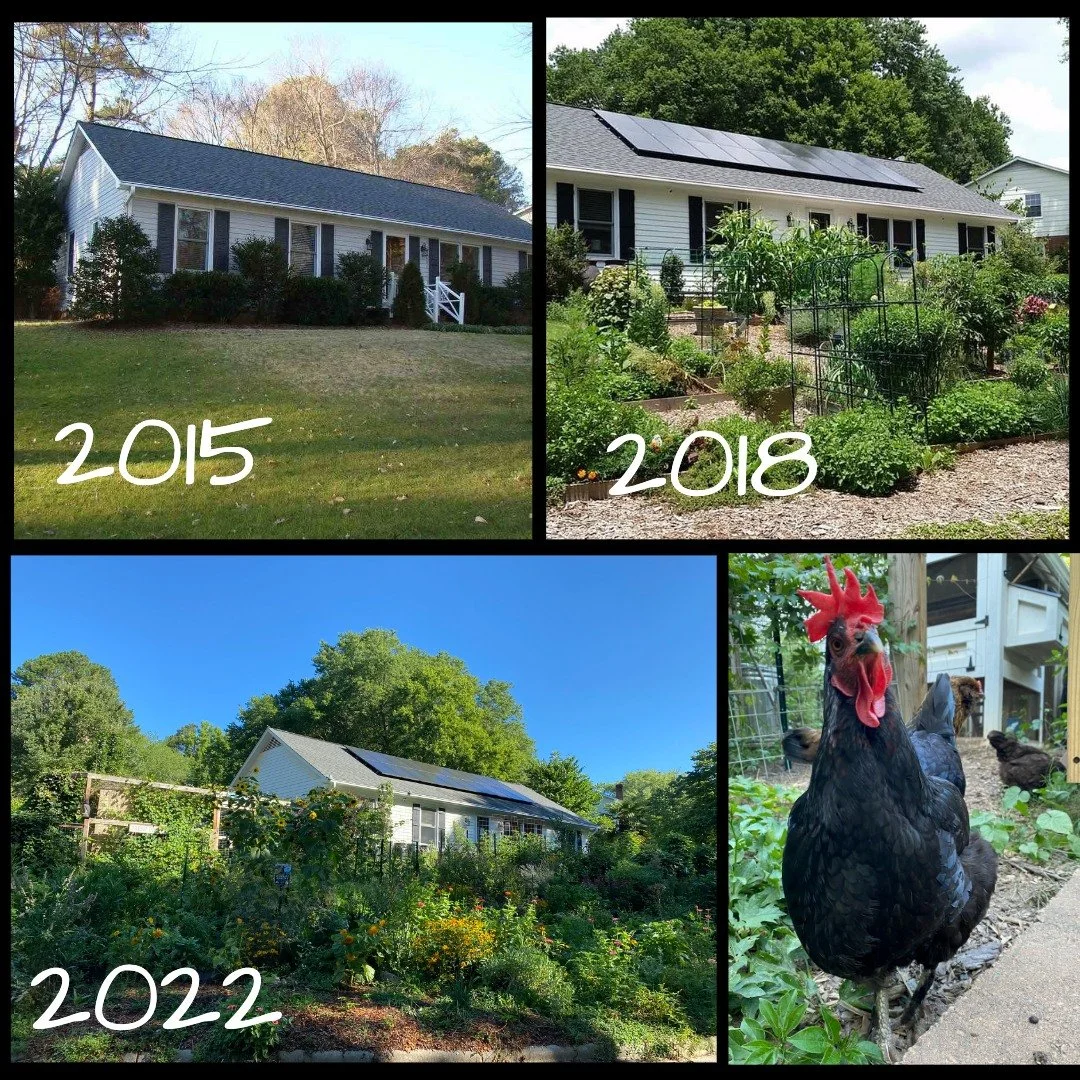
I was surprised by how quickly the soil transformed. In only 3-5 years, we were planting in the ground. Because wood chips are great mulch, they reduce water loss and release water slowly after a rain.
The other challenge we faced was the property's slope. We had cedar beds built into the steepest part of the slope and filled them with perennials. But the slope also posed a problem with raised beds. We were buying prefab beds, and you really need a flat surface. Over the years, we changed to planting straight in the ground until the weed/Bermuda grass pressure became too much, so we switched back to raised beds, this time using metal beds instead of the prefab cedar ones. I love the look of cedar beds, and had we the time and money, we would have built our own to better fit the yard's slope, but we opted instead for the Vego Garden raised metal beds.
The wood chips also helped change the topography of our property, making the slope less pronounced. We also added plant material from trimming and weeding to a section closer to the house, creating a significant flat area in front of our large chicken coop. Prior to that, we added soil from the backyard where we had a patio installed, moved it aside, and built a retaining wall to create over 25 square feet of flat area for our chicken coop back in 2017.
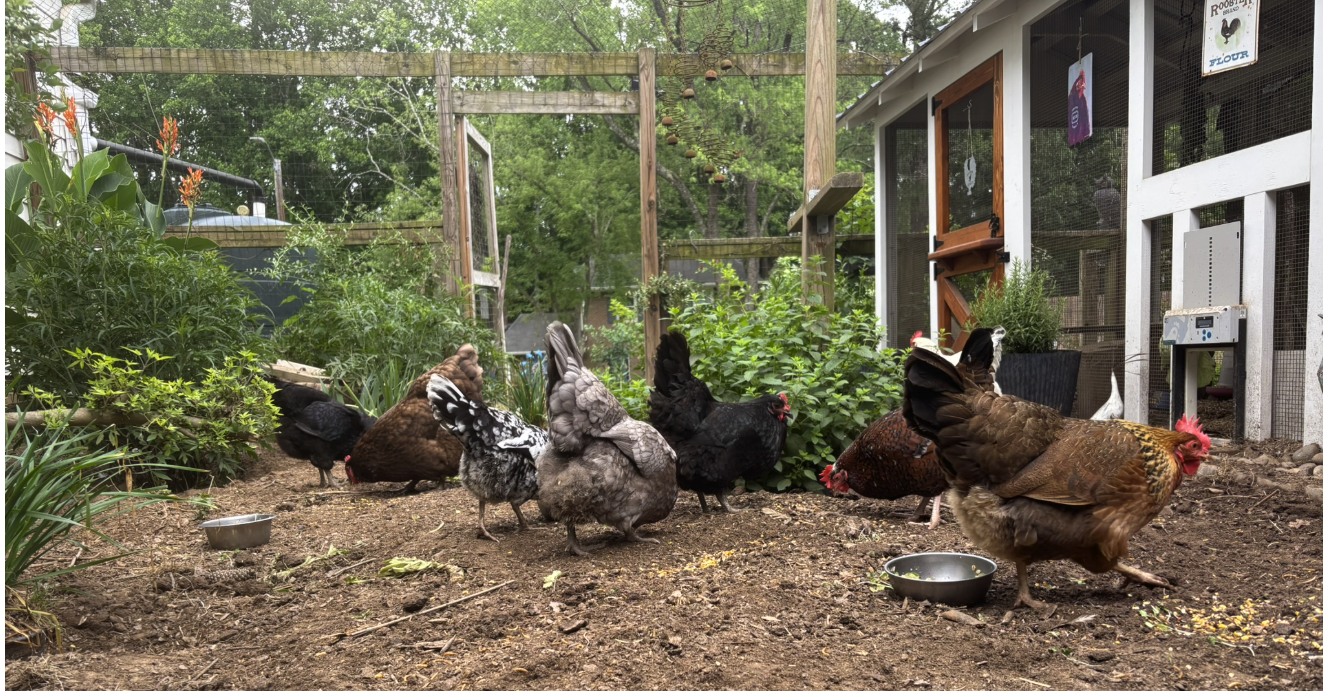
This was a big slope when we moved it. Now it’s a 25’ square area for the coop with poultry netting above.
One takeaway here is that you can significantly change your property if you want to. Although we still have a slope, it’s much less pronounced, and by creating all this plant material and wood chips to help make flat areas, we have increased the actual growing space on our property.
Water, Water Everywhere
Another big challenge was watering. It wasn’t so difficult when our garden was smaller and manageable, but now that we have taken over the entire property, with a garden on the front, back, and side, watering has become a much bigger issue.
We immediately made rain barrels to capture water. We hooked them up so they would fill and empty together, making it easier to get water from one or two spigots. We used Oyas in 4’x4’ raised beds. We moved from about 20 rain barrels to two 500-gallon cisterns, one in front and one in back. We still have four attached rain barrels in front, one for the chickens, and three in the backyard. The cisterns have a pump, and we have hoses running off it to various places in the yard, making it easier to water by hand with the nozzle.
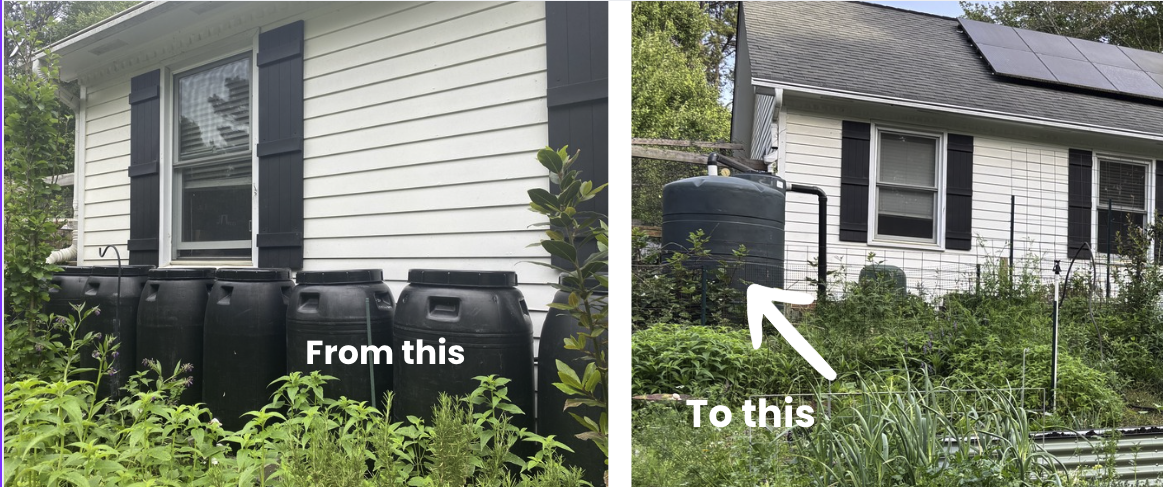
We went from 20+ rain barrels to two 500-gallon cisterns and eight rain barrels
However, this year’s severe drought had us rethinking our watering situation. We usually get enough rain in spring and early summer to water our garden and fill the cisterns. Those cisterns would usually carry us through summer into July and August, when rain was scarce in the Raleigh, NC, area. And we would normally only have to use city water for a week or two before a hard rain filled the cisterns back up.
This year (2026), we didn’t get that spring rain, and by the middle of June, we were 15” below our average rainfall. Lakes were drying up, and water restrictions were imposed. It was such a challenge because our hoses that hooked up to the house not only didn’t have the water pressure the pump and cisterns provided, but they also didn’t reach the side of our property. As a result, many of my seeds never germinated, plants died, and some natives and other perennials struggled, growing to half the size they were last year.
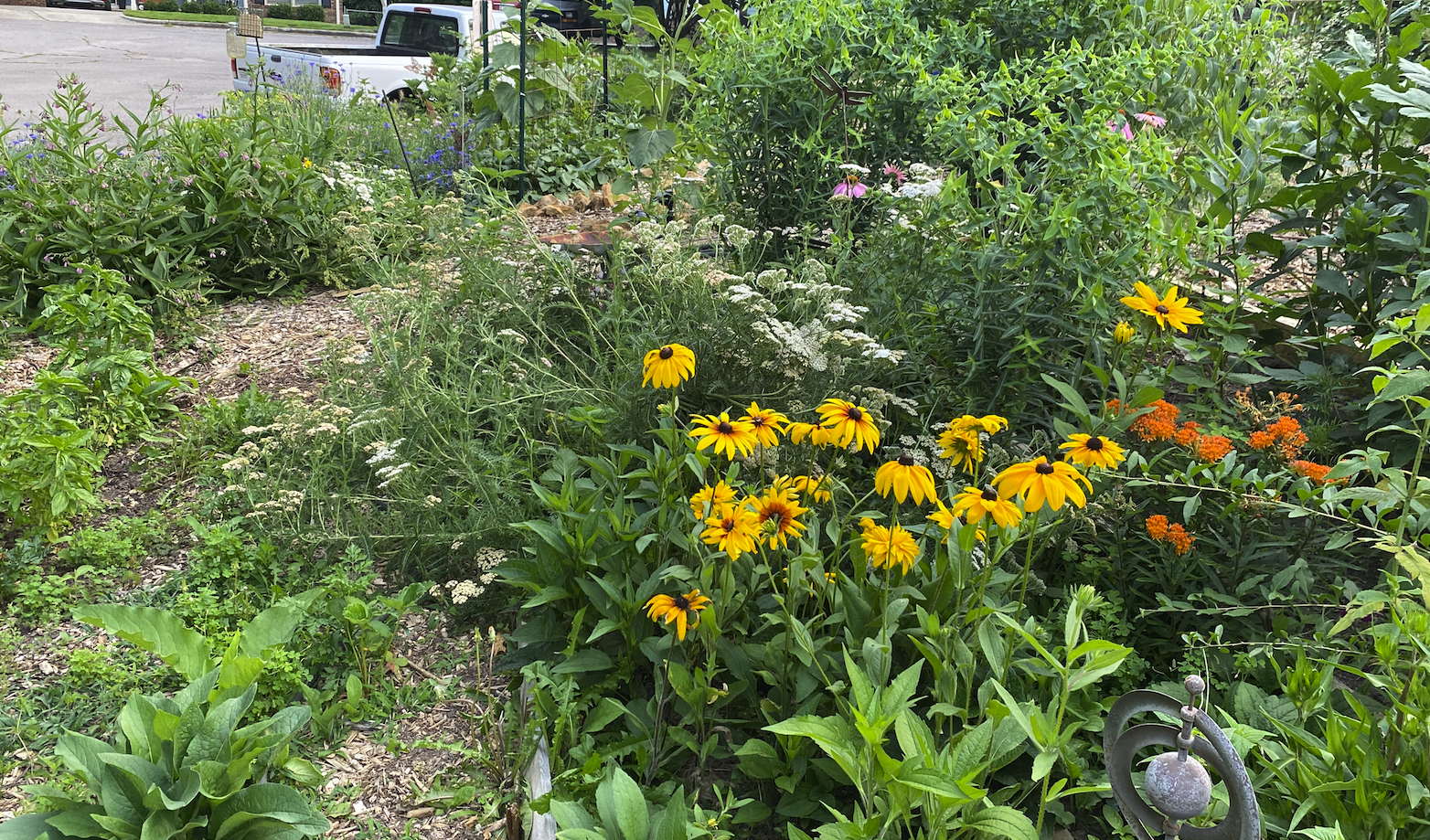
Native plants are much more resilient and can handle more extreme weather conditions.
However, using native plants is a great way to build resilience in your garden, as they can withstand and even thrive when conditions aren’t ideal.
Going forward, we plan on using drip irrigation for the raised beds. It’s important that we water consistently in the beds where we grow our seasonal food.
Hot and Humid all Summer Long
Another challenge is the temperatures. It was unseasonably cold in late March and early April, so I was hesitant to plant my tomatoes. Then it warmed up and got unseasonably hot very early. So severe heat and severe drought make for a sad and very stressful growing season for both me and the plants.
Wildlife: Friend or Foe
This year, we had bunnies born on our property that took up residence and ate the bean, sunflower, and zinnia seedlings that were popping up. We also live right next to a park and have deer that regularly walk down our block and feed on the vegetation. We combat this by using motion-sensored sprinklers that turn on at dusk, scattered around the front of the yard where the food is, to scare them off. It’s been the most effective thing yet. We tried fishing line, predator eye blinking lights, and deer netting. The deer netting is effective, but it also makes it harder to maintain the garden and harvest food, and I wasn’t crazy about how it looked in the garden.
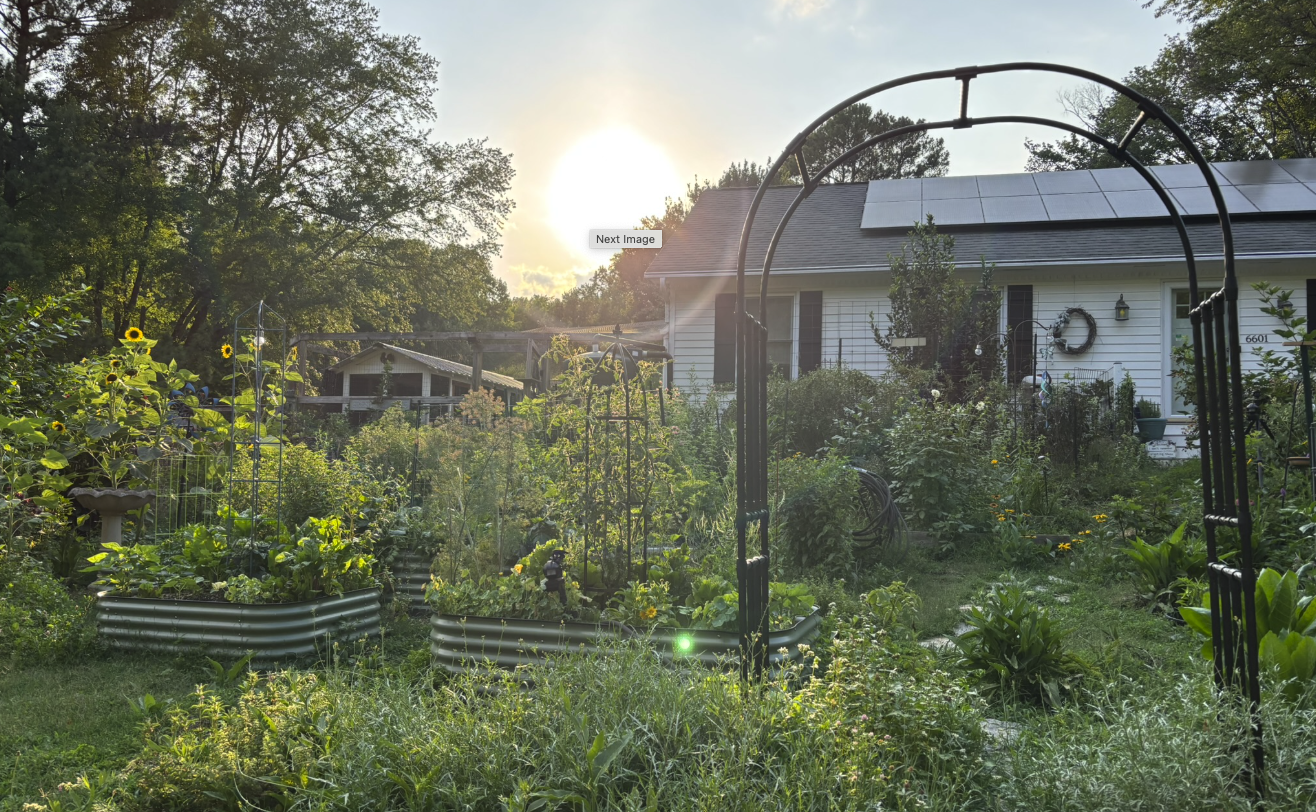
Despite the drought and other challenges in 2026, the garden is still thriving.
All this to say: despite the weather, the terrain, the watering, and the wildlife, gardening always brings challenges. Some plants die, some tomatoes produce horribly, and some peppers get eaten by deer, but we still keep going. We find what works, improve what doesn’t, and remember it isn’t a personal failing if we don’t get a good watermelon this year. We keep trying, and if a veggie or perennial doesn’t do well year after year, we remove it and try something else. Giving up entirely is not an option.
The garden gives back so much to us. Not only do we harvest food season after season and year after year, but the various flowers and plants also feed pollinators and provide shelter and habitat for all sorts of wildlife. We have frogs, toads, anoles, a multitude of bees and other pollinators, caterpillars, moths, butterflies, dragonflies, and yes, rabbits. And it’s a lot of hard work, but my husband and I enjoy it (not so much when it’s 95+ degrees and humid). We love the biodiversity we have created. The wildlife, pollinators, and plants give us peace when the world is crazy. We still marvel at a cool-looking bug, a rat snake, or a big harvest as if it were our first time seeing such things.
So my advice is simple: just start. It doesn’t have to be perfect because it’s not permanent. You might fail and kill plants, have a crappy harvest, or deal with a basil fungus or squash vine borers, but that’s okay. It’s all part of gardening, learning, and growing.
Ready to build a garden that can weather anything? Schedule a free discovery call with Ralstead Foodscapes, and let's get started.