
Growing a Kitchen Garden to Feed You All Year
Plan once. Harvest every season.
Most of us think of vegetable gardening as a summer thing. You plant your tomatoes in April or May, enjoy a glorious August harvest, and then watch everything die back by October. The garden beds sit empty for months, and by February, you're wistfully scrolling seed catalogs while buying sad grocery store greens.
Imagine if your garden could supply fresh food year-round.
Year-round gardening transforms your outdoor space from a seasonal source of food to a constant provider. Understanding this approach unlocks the full potential of your garden.
It's Not One Garden. It's Four.
Here's the paradigm shift: a year-round kitchen garden isn’t a single garden to maintain—it’s four mini-gardens stacked together, one for each season.
If you're gardening in North Carolina's Zone 8a, you have four distinct growing windows to work with. Spring brings cool-weather crops like lettuce, spinach, and peas. Summer is prime time for tomatoes, cucumbers, peppers, and okra. Fall — and this surprises many people — is often more productive than spring, with kale, broccoli, carrots, and beets thriving in the cooler air. And winter? With a little help from row covers that act as a mini-greenhouse layer, cold-hardy greens like Swiss chard, lettuce, kale, and collards keep right on growing.
Effective year-round gardening requires planning for all four seasons to ensure your garden produces continuously.
The Secret Weapon: Succession Planting
One of the most common mistakes gardeners make is planting everything at once, only to wonder why they're drowning in zucchini one week and have nothing to pick the next.
Succession planting solves this. Instead of sowing an entire row of lettuce at once, you plant a partial row every three to four weeks. The result is a steady, manageable harvest for months, rather than one overwhelming flush that bolts before you can use it all.
The same logic applies to the bigger picture. While you're harvesting summer tomatoes, you should already be starting fall brassica seeds indoors. When the spring lettuce finishes, beans go in right behind it. Every bed has a crop waiting in the wings — there's no dead time.
Good Soil Makes Everything Possible
None of this works without healthy soil, and that is where many second-year gardens start to disappoint. The excitement of a first season can mask underlying soil issues that catch up with you later.
For raised beds, which are ideal in North Carolina's clay-heavy soils because they warm up faster in spring and drain better in summer, a layered approach works best. Think cardboard for weed suppression, organic material like sticks and leaves to build structure, quality topsoil, and a generous finish of a compost/soil mix. Skip the landscape fabric; it does more harm than good over time.
Amend your soil with compost as you plant new crops, and it will keep improving season after season.
Companion Planting: Best Defense Against Pests
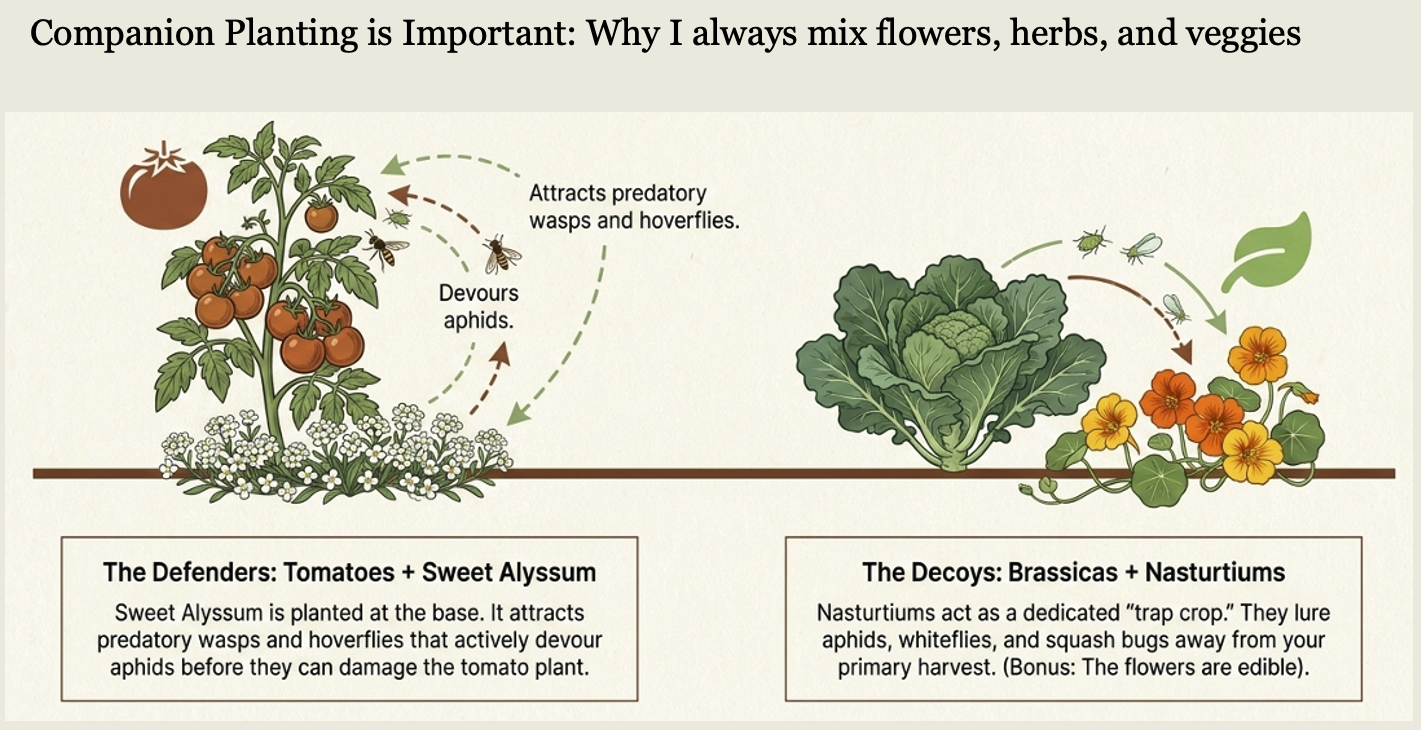
A foodscape isn't just vegetables, and that's not just about aesthetics. Mixing flowers and herbs throughout your beds is what's known as companion planting, and it does real work. Companion planting helps deter pests and defend against disease.
Basil planted near tomatoes deters thrips and aphids. Sweet alyssum attracts the predatory wasps and hoverflies that feast on aphid populations — often more effectively than spraying anything. Nasturtiums act as a trap crop, luring aphids and whiteflies away from your cucumbers and broccoli. French marigolds confuse and deter soil pests.
The result is a garden that builds its own defenses. Beneficial insects never leave because there's always something blooming for them. Bare soil stays covered, reducing weed growth. And the whole system hums along with a lot less intervention from you.
Don't Overlook Fall
If there’s one thing worth repeating, North Carolina’s fall season is a gift most gardeners ignore.
While the rest of the country is winding down, Zone 8a gardens are experiencing what's sometimes called a "second spring." Garlic goes in the ground in October and comes back in early summer. Kale, collards, and broccoli actually improve after a frost — cold weather converts their starches to sugars, making them sweeter and more flavorful. A row cover thrown over leafy greens in December can extend fresh harvests well into January.
Planning for fall starting in August (when you start cole crops indoors, broccoli, kale, brussel sprouts) is one of the highest-return things you can do as a home gardener.
Where to Start
The most common mistake is trying to do everything at once. A better approach: start by mapping your sunlight (most vegetables need six to eight hours of direct sun), decide what you actually want to eat, and build your planting calendar around that.
With a clear plan, your garden can provide fresh food year-round.
Not Sure Where to Start? That's What the Discovery Call Is For.
Every year-round garden looks a little different depending on your space, your schedule, and what you love to eat. A free discovery call is simply a conversation. A chance to ask questions, share your vision, and figure out what's realistic for your yard.
If it feels like a good fit, the next step is a consultation and site assessment where we take a close look at your outdoor space and map out a four-season plan just for you.
Grab a free discovery call here: no commitment, just a good conversation about growing more food at home.