
Native Pollinator Patch
Support local pollinators while adding beauty, life, and ecological value to your garden
One of the most impactful additions to your landscape
A native pollinator patch creates a haven for bees, butterflies, and beneficial insects that help your entire garden—and ecosystem—thrive. It's beautiful, low-maintenance, and essential for biodiversity.
Essential Habitat
Provide food, shelter, and breeding grounds for native pollinators including bees, butterflies, hummingbirds, and beneficial insects that are declining due to habitat loss.
Year-Round Beauty
Enjoy continuous blooms from early spring through late fall with carefully selected native plants that offer vibrant colors, varied textures, and seasonal interest.
Regional Resilience
North Carolina native plants are perfectly adapted to our climate, soil, and rainfall patterns—meaning less watering, fewer inputs, and thriving plants with minimal effort.
Improved Harvests
Pollinators increase yields in your vegetable garden and orchard. More pollinators mean better fruit set, larger harvests, and a healthier, more productive landscape overall.
Plants chosen for beauty, ecology, and resilience
Each plant is selected for its ecological value and ability to thrive in North Carolina's climate—creating a pollinator paradise that's both stunning and sustainable.
Joe Pye Weed
Eutrochium purpureum
Towering stalks topped with vibrant pink-purple flower clusters in late summer become a magnet for butterflies, especially swallowtails and monarchs. This dramatic native thrives in sun to part shade and provides essential late-season nectar when other blooms fade. Its architectural presence adds height and movement to any pollinator patch.
Purple Coneflower
Echinacea purpurea
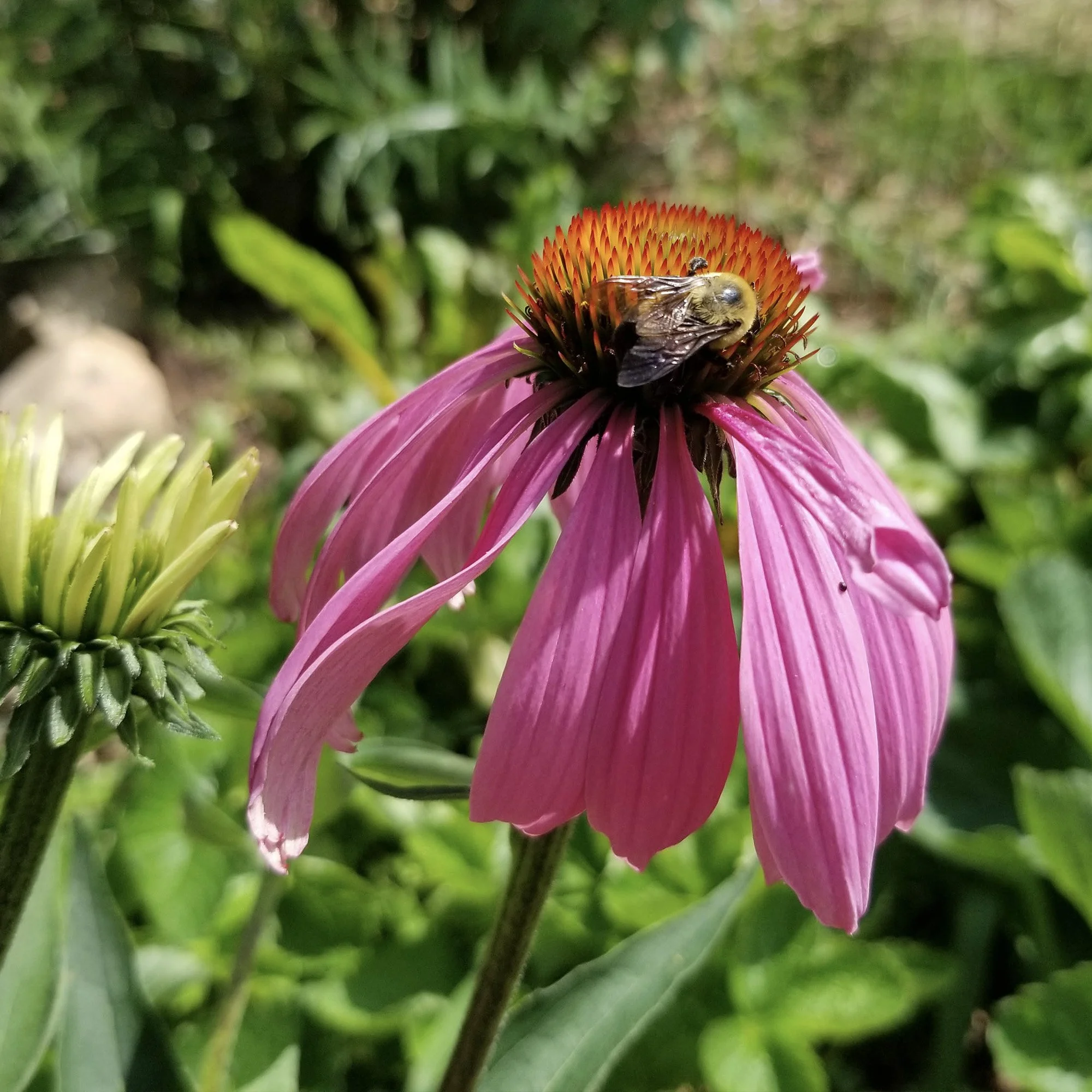
Cheerful purple-pink blooms with distinctive cone-shaped centers buzz with bees all season long. This iconic native is drought-tolerant, deer-resistant, and blooms prolifically from early summer through fall. Beyond its pollinator appeal, coneflower seeds provide food for goldfinches and other songbirds in winter, extending its ecological value year-round.
Milkweed
Asclepias tuberosa (Butterfly Weed) & Asclepias incarnata (Swamp Milkweed)
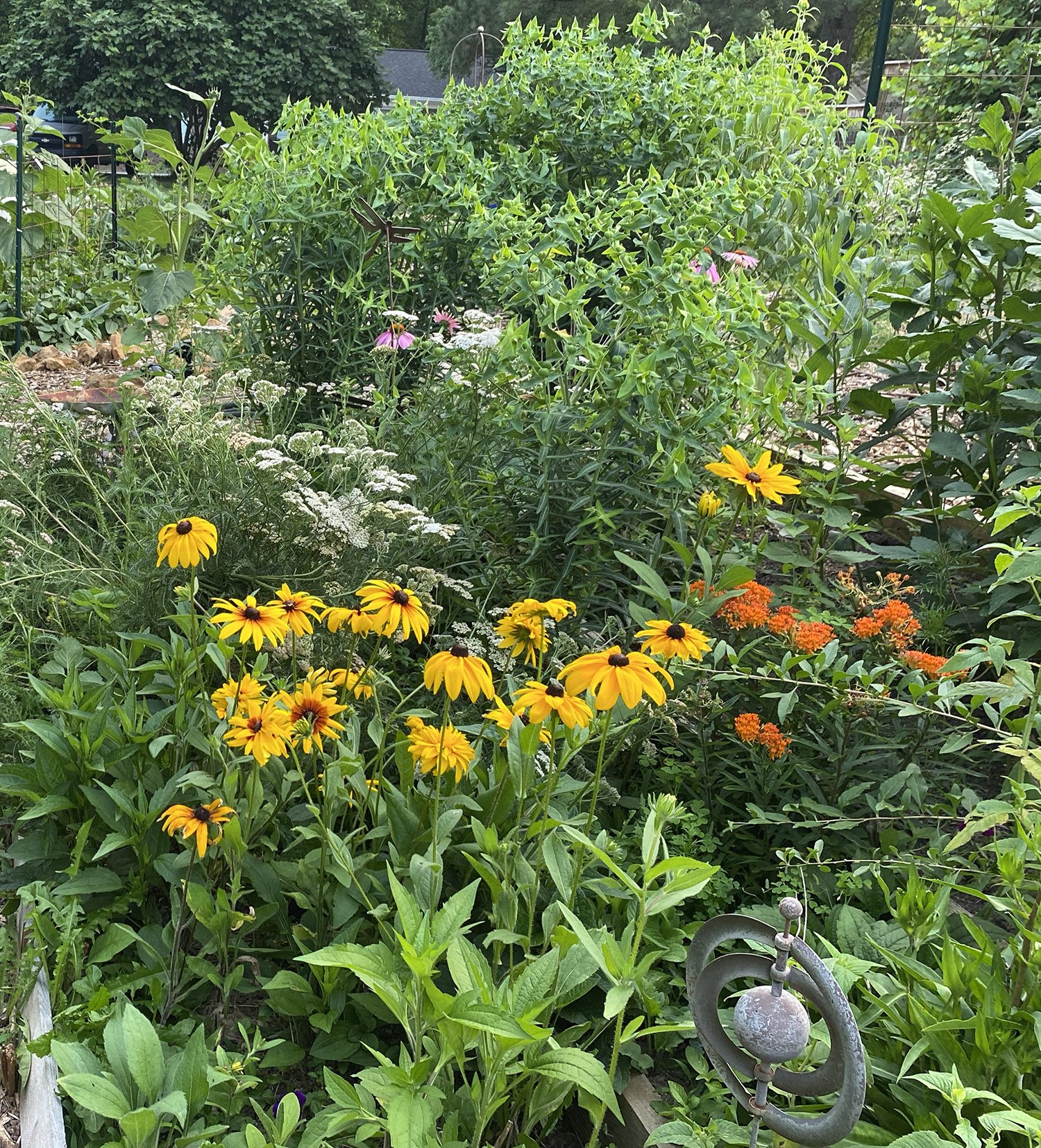
Essential habitat for Monarch butterflies, milkweed is the only plant Monarchs use to lay their eggs and feed their caterpillars. Butterfly Weed offers brilliant orange blooms in dry, sunny spots, while Swamp Milkweed thrives in moist areas with soft pink flowers. Both are nectar sources for numerous pollinators and crucial for Monarch survival and migration.
Black-Eyed Susan
Rudbeckia hirta
Bright golden-yellow blooms with dark centers bring cheerful color from summer through fall. This hardy, adaptable native tolerates a wide range of soil conditions and attracts bees, butterflies, and beneficial insects. Its prolific blooms and self-seeding nature make it a reliable, low-maintenance anchor for any pollinator garden.
Wild Bergamot
Monarda fistulosa
Lavender-pink blooms with a delightful minty fragrance attract hummingbirds, bees, and butterflies throughout the summer. This deer-resistant native thrives in sun to part shade and spreads gently to fill spaces. Its aromatic foliage and showy flowers add both sensory appeal and pollinator power to your landscape.
Beauty with purpose. Habitat with impact. Gardens that give back.
A native pollinator patch is more than just a garden—it's an investment in biodiversity, ecosystem health, and the future of pollinators in your region. Each plant is chosen for its ecological value, beauty, and ability to thrive in North Carolina's unique climate.
Whether you choose full installation or DIY coaching, you'll create a vibrant, low-maintenance habitat that supports local wildlife, enhances your landscape, and brings joy for years to come.
Ready to Create a Pollinator Haven?
Let's design a native pollinator patch that brings beauty, biodiversity, and beneficial insects to your landscape.
Get Started Today